Understanding the Hip Joint: Anatomy and Function
Intro
The hip joint, often taken for granted, plays a pivotal role in our everyday movement. Understanding its anatomy and functions provides foundational knowledge for students, researchers, and professionals interested in human physiology and movement sciences. This article will provide a detailed examination of the hip joint, including its structural components, biomechanical functions, and common pathologies that can impair its function.
Research Context
Background Information
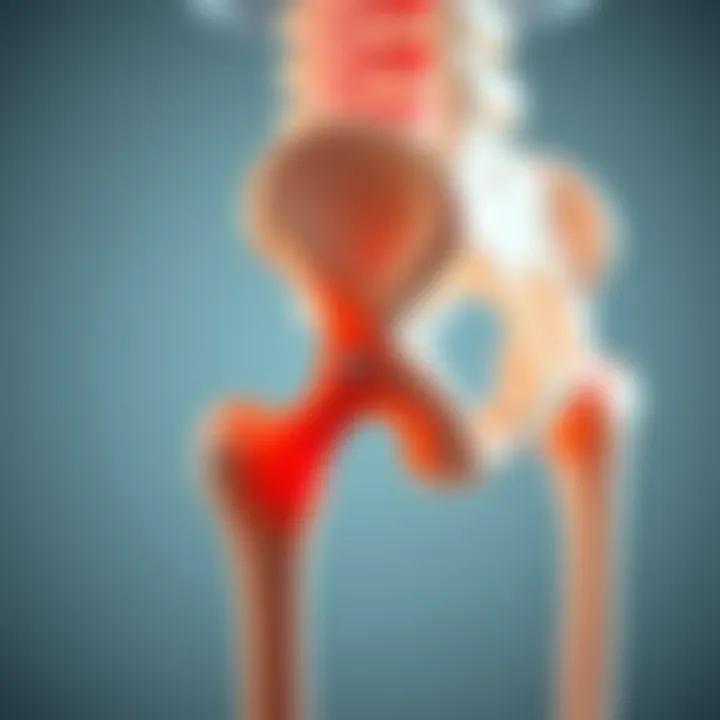
The hip joint, formed between the femur and the pelvis, is classified as a ball-and-socket joint. This structure allows for a wide range of motion, making it essential for activities such as walking, running, and climbing. From a biological perspective, its design supports both stability and mobility—two elements that are crucial as humans carry out daily functions.
It's worth noting that the hip joint endures significant stress, particularly in weight-bearing activities, prompting a higher incidence of wear and tear diseases like osteoarthritis. Understanding how the hip joint operates—and how it is affected by various conditions—can inform better healthcare practices and rehabilitation strategies.
Importance of the Study
The implications of studying the hip joint extend beyond mere academic interest. As populations age, the prevalence of hip-related conditions is likely to rise, making it essential to recognize early signs of issues. Moreover, the joint's role in overall physical performance and fitness cannot be overstated.
Research indicates that maintaining hip joint health contributes not only to mobility but also to reducing injury risks in other areas of the musculoskeletal system. Thus, this article aims to illuminate the vital contributions of the hip joint to overall health, providing insights for both clinical and casual audiences.
Discussion
Interpretation of Results
Research repeatedly highlights that the hip joint’s complexity demands thorough comprehension for effective treatment and rehabilitation plans. For instance, studies have shown that targeted exercises can enhance stability and strength around the hip, potentially delaying the onset of arthritis or reducing the severity of existing conditions.
Comparison with Previous Research
Previous research has primarily focused on injuries stemming from acute trauma or overuse, yet recent findings urge a shift toward understanding long-term degenerative conditions. While earlier studies provided valuable insights on mobility post-injury, the conversation is now expanding to include preventive measures, emphasizing the groundwork that can be laid before problems arise.
Research suggests that proactive measures—such as strength training and flexibility exercises—are key in maintaining hip joint health.
In summation, understanding the hip joint from multiple angles not only paints a detailed picture of its anatomical and functional significance but also underscores the importance of preventive care in maintaining its integrity over a lifetime.
By diving deeper into the anatomy, mechanics, and common pathologies associated with the hip joint, this article will equip you with a well-rounded understanding, paving the way for smarter choices regarding health and wellness. More resources on the hip joint and related studies can be found at Wikipedia, Britannica, and various academic publications.
The Anatomy of the Hip Joint
The anatomy of the hip joint serves as the cornerstone of understanding not only its structure but also its function and significance within the human body. This joint bears immense weight and plays a critical role in movement and stability, making it an essential focus for anyone keen on learning about biomechanics or rehabilitation. Grasping how its unique components come together can provide insights into a multitude of conditions that can impact mobility and quality of life.
Overview of Hip Joint Structure
The hip joint consists of a ball-and-socket structure, where the femoral head fits nicely into the acetabulum of the pelvis. This design allows for a wide range of motion, making activities such as walking, running, and squatting easier and more fluid compared to other joints. The joint capsule, which surrounds the hip joint, is made from strong connective tissue that helps keep the bones together and provides stability. Understanding this structure helps explain why the hip joint can efficiently support dynamic activities while remaining somewhat vulnerable to injuries and degenerative diseases.
Types of Bones Involved
Femur
The femur, or thigh bone, is the longest bone in the human body, with its head fitting perfectly in the hip joint socket. Its length and sturdy nature provide vital leverage during movement and contribute to overall joint stability. One key characteristic of the femur is its unique angling; the head is positioned at an angle that optimizes range of motion while allowing for effective load distribution. This design becomes beneficial in activities that involve high impact, such as running or jumping, as the femur can effectively absorb stress and reduce the risk of fractures.
Pelvis
The pelvis serves as the anchor for the hip joint; its shape is critical in keeping the hip stable and appropriately aligned during movements. It contains the acetabulum, which forms a secure socket for the femur's head. A noteworthy characteristic of the pelvis is the ability to adapt during various activities; as one moves or changes posture, the pelvis can tilt or rotate in response, aiding balance and mobility. However, the pelvis can also be a point of injury, particularly in high-impact sports, underscoring its vital role in overall hip joint health.
Cartilage Functionality
Hyaline Cartilage
Hyaline cartilage serves as a smooth covering on the hip joint surfaces, ensuring that movements are fluid and reducing friction between bones during various activities. This cartilage is significant because its resilience allows for weight distribution while absorbing shocks from impacts, such as when one's foot strikes the ground during a run. One key feature of hyaline cartilage is its translucent appearance and elastic properties, making it both versatile and effective at maintaining joint health. However, without proper maintenance through movement, this cartilage can degenerate, leading to joint stiffness and pain.
Labrum
The labrum is a ring of fibrocartilage that surrounds the acetabulum, deepening the socket and providing extra stability to the hip joint. Its ability to grip the femoral head is a key feature that helps prevent dislocations, especially during fast or sudden movements. The labrum's unique structure enhances the overall load-bearing capacity of the joint while also allowing for a range of motion. However, injuries to the labrum can significantly affect joint function, often requiring physical therapy or surgical intervention.
Ligaments and Their Roles
Iliofemoral Ligament
The iliofemoral ligament is one of the strongest ligaments in the human body, anchoring the femur to the pelvis and playing a crucial role in stability. This ligament assists in preventing excessive hip extension, which can occur during activities like jumping or running. Its unique structure allows it to withstand considerable force while maintaining joint integrity. A potential downside is that if this ligament becomes overstretched or torn, it may lead to instability or pain, hampering mobility.
Pubofemoral Ligament
The pubofemoral ligament, located at the front of the hip joint, serves to limit excessive abduction and extension. This ligament is valuable for maintaining structural support during dynamic movements, ensuring the joint remains aligned during activities such as lunging. Its position is a standout feature that helps modulate movement while offering stability. However, similar to its counterpart, injury to this ligament can lead to compromised hip function and subsequent rehabilitation needs.
Biomechanics of the Hip Joint
The biomechanics of the hip joint is a pivotal aspect of understanding how this complex joint contributes to movement and overall human function. The hip is involved in a vast array of movements, and its biomechanical properties play a significant role in maintaining stability while enabling mobility. By exploring the specific elements and functions of the hip joint mechanics, one can appreciate its importance in daily activities such as walking, running, and jumping. The intricate dance of bones, ligaments, muscles, and cartilage work in synergy, allowing for both flexibility and strength.
Joint Movement Types
Flexion and Extension
Flexion and extension are fundamental movements at the hip joint that immensely influence our ability to perform many activities. Flexion involves bringing the thigh closer to the abdomen, while extension refers to moving the thigh backward, away from the body.
The key characteristic of flexion and extension is their role in almost every physical activity, whether bending down to tie shoelaces or swinging a leg during running. This flexibility is essential and, thus, considered one of the most beneficial movement types for the hip joint.
A unique feature of flexion is its ability to facilitate movements like squatting and climbing stairs that require a high range of motion. However, excessive flexion can lead to strain if not managed properly, resulting in discomfort or injury. Similarly, extension enhances activities such as walking and standing but can also lead to problems like lower back pain if the muscles become tight or imbalanced.
Abduction and Adduction
Abduction and adduction are terms that describe the movements moving away from (abduction) or toward (adduction) the midline of the body. These movements are crucial for lateral motions like side-stepping or changing direction, which are commonly seen in sports.
The standout feature of abduction is how it stabilizes the pelvis during movements, often working in tandem with the leg muscles. This dynamic is why abduction is a favorite focus in rehabilitation programs; it ensures proper alignment and strength during lateral activities.
On the flip side, while adduction supports activities such as crossing one's legs or bringing the limb back towards the body, it can lead to tightness if overdone, potentially affecting overall hip joint range.
Weight Bearing Mechanisms
Stress Distribution
Stress distribution across the hip joint is vital for efficient movement. This mechanism allows the absorption of impacts while maintaining stability during weight-bearing activities. The hip joint handles significant forces, particularly during dynamic movements like running or jumping.
An important characteristic of proper stress distribution is its ability to reduce the risk of joint degeneration. When done right, stress is spread evenly, allowing the cartilage to remain healthy. Good stress distribution is notably beneficial in preventing injuries.
However, improper distribution can lead to areas of concentrated load, risking conditions such as osteoarthritis. Hence, understanding how stress acts in this join is crucial for anyone looking to minimize injury risk during physical activity.
Load Transfer
Load transfer refers to how forces are moved through the body during weight-bearing activities. The hip joint acts as a conduit for loads from the upper body to the legs, making it central during walking or running.
The main feature of effective load transfer is its ability to maintain balance while in motion. When load transfer occurs smoothly, it enhances performance in sports and daily activities. For athletes, good load transfer can mean the difference between success and injury on the field.
That said, poor load transfer can lead to overuse injuries, as the body compensates for inadequate mechanics. Recognizing load transfer patterns can be key for physical therapists when designing treatment plans.
Muscle Contributions
Hip Flexors
Hip flexors are muscles that play a vital role in enabling movements such as walking and running, as they help lift the thigh towards the torso. The primary hip flexor, iliopsoas, is essential in supporting various activities.
An important feature of hip flexors is their capacity for speed and agility, making them critical for athletes. They allow for swift movements and necessary flexibility, which is often beneficial in sports where quick direction changes are involved. However, tightness in these muscles can lead to restrictions in movement and discomfort.
Extensors
Extensors work in contrast to hip flexors, primarily responsible for moving the thigh backward. The gluteus maximus is the main muscle here, crucial during activities involving lifting or moving upwards.
The unique characteristic of extensors is their strength and power, which are significant contributors to athletic performance. They provide the force necessary for explosive actions like jumping. However, over-reliance on these muscles without balancing with flexibility can lead to increased injury risk.
Rotators
Rotators assist in the internal and external rotation of the hip, contributing greatly to stability. They come into play during activities that require directional changes, such as pivoting.
Rotators can be particularly beneficial for sports that involve twists and turns, like soccer and basketball. However, neglecting these muscles can lead to joint instability and discomfort, emphasizing the importance of a well-rounded approach that includes proper strengthening and flexibility work.
In summary, the biomechanics of the hip joint encompasses vital movements and mechanisms that are fundamental to everyday activities and athletic needs. Understanding these aspects can lead to better performance, injury prevention, and overall joint health.
Common Conditions Affecting the Hip Joint
Understanding the conditions that can affect the hip joint is crucial for anyone concerned with maintaining mobility and overall health. The hip joint stands as a vital pivot in both static posture and dynamic movements. Consequently, various issues can arise, leading to pain and diminished functionality. Identifying these conditions early often correlates with better management and treatment outcomes. This section delves into the most common of these conditions, illuminating not just their symptoms but also their implications on daily life.
Osteoarthritis
Osteoarthritis is one of the most prevalent conditions affecting the hip joint, often developing with age or due to repeated stress on the joint. This degenerative joint disease occurs when the protective cartilage at the ends of bones wears down over time. Symptoms typically include:
- Pain: Often felt in the hip, groin, or thigh, this pain can worsen with activity.
- Stiffness: Particularly noticeable after periods of inactivity or in the morning.
- Limited Range of Motion: Activities that require a full range of motion, such as bending or twisting, may become challenging.
Management often revolves around lifestyle adjustments, physical therapy, and, in advanced cases, surgical options such as hip replacement. Understanding the progression of osteoarthritis is key, as catching it early might stall further joint deterioration.
Hip Impingement
Hip impingement, or femoroacetabular impingement (FAI), occurs when the hip joint bones rub against each other abnormally. This condition can be categorized into three main types: cam, pincer, and combined impingement. The symptoms typically include:
- Hip Pain: Especially during activities like sitting, squatting, or twisting.
- Reduced Mobility: Athletes, in particular, may find it difficult to perform at peak levels.
- Clicking or Locking: Sensations when moving the hip joint are not uncommon.
Early intervention is critical here. Conservative treatments often include physical therapy to improve joint mechanics, while surgical options may be necessary if conservative measures fail. Recognizing hip impingement not only preserves function but also enhances quality of life.
Fractures and Dislocations
Fractures, particularly neck of femur fractures, are serious injuries that often occur in older adults, usually due to falls. Dislocations can occur in various contexts but often happen following trauma. Key points to consider include:
- Fractures: Typically result in severe pain, inability to bear weight, and significant swelling. They often require immediate medical attention and can lead to complications if not treated promptly.
- Dislocations: Can lead to a visible deformity and may accompany fractures or soft tissue injuries. Immediate treatment is necessary to reduce the risk of long-term damage.
Recovery from these injuries often comprises surgical intervention and extensive rehabilitation. Awareness of prevention strategies, such as strength training and fall prevention measures, is essential for at-risk populations.
Tendonitis and Bursitis
Tendonitis and bursitis are conditions resulting from inflammation of the tendon and bursa, respectively, around the hip joint. While they can happen in isolation, they often co-occur, especially in active individuals. Common symptoms include:
- Pain in the Hip: This can radiate down the leg and is often aggravated by movement.
- Swelling: Localized inflammation can occur, as well as tenderness in affected areas.
- Difficulty with Movement: Basic motions like walking, running, or climbing stairs can become compromised.
Treatment mainly focuses on rest, ice application, and anti-inflammatory medications. Gradually reintroducing movement through physical therapy is crucial for recovery. Recognizing and addressing these conditions early on can not only alleviate pain but restore optimal joint function.
Ignoring hip joint issues can lead to complications that extend far beyond the joint itself, impacting overall mobility and quality of life.
By understanding these common conditions, individuals can take proactive steps toward managing their hip joint health. Early recognition and intervention can pave the way to more effective treatments, keeping individuals active and engaged in their daily lives.
Diagnosis of Hip Joint Issues
Understanding the processes involved in diagnosing hip joint issues is absolutely crucial for ensuring accurate treatment and rehabilitation. The hip joint, being a major weight-bearing joint, can become compromised due to a variety of conditions. Early and precise diagnosis can lead to better outcomes for patients. This section delves into the methods used to investigate hip joint problems, highlighting specific elements and considerations that shape effective medical intervention.
Clinical Evaluation
In the realm of diagnosing hip joint issues, clinical evaluation serves as the vital first step. This process begins with a detailed patient history. The physician often asks about the onset of pain, its intensity, and any previous injuries. Engaging with the patient's narrative helps paint a clearer picture of what’s going on. Then comes the physical examination—through observation and manipulation, a doctor might check for range of motion, tenderness, and swelling.
- One common technique includes the FABER test, which checks for hip or sacroiliac joint dysfunction.
- The physician may also assess the strength of surrounding muscles since weakness can signal underlying problems.
This entire evaluation process is foundational. It not only guides the physician in determining potential issues but also informs the need for further imaging.
Imaging Techniques
When clinical evaluations indicate potential hip joint problems, imaging techniques come into play. These methods help visualize the internal structures of the hip, shedding light on hidden conditions. Here’s a closer look at two primary imaging modalities:
X-rays
X-rays are often the go-to choice for initial imaging of hip joint issues. Their key characteristic revolves around their ability to capture bone structures rapidly.
- Benefits: They are quick, relatively inexpensive, and provide immediate results. For conditions like osteoarthritis, X-rays can reveal joint space narrowing or bone spurs.
- Unique Feature: X-rays excel at identifying fractures, making them a practical first-line investigation for acute injuries.
- Limitations: However, they fall short in assessing soft tissues, meaning cartilage issues or muscle injuries may go unnoticed.
MRI
Magnetic Resonance Imaging (MRI) represents one of the most comprehensive imaging techniques available for examining the hip joint. Its significance lies in its ability to visualize soft tissue structures in detail.
- Benefits: An MRI can identify cartilage damage, inflammation, and even early signs of stress fractures, making it a crucial tool for diagnosing a variety of conditions.
- Unique Feature: Unlike X-rays, MRIs do not use ionizing radiation, which appeals to practitioners aiming to minimize patient exposure to harmful effects.
- Limitations: MRI scanning is generally more costly and time-consuming than X-rays, which may delay diagnosis in urgent settings.
Differential Diagnosis
This strategy involves considering various potential conditions that might be causing the symptoms. For example, pain in the hip area could stem from osteoarthritis, hip impingement, or even issues within the lower spine. A thorough understanding of the related pathologies helps narrow down the likely culprits and ensures that treatments targeted effectively address the problem. Taking time to explore all possible angles can make a significant difference in a patient’s recovery trajectory.
"The odds of an accurate diagnosis vastly increase when a detailed, patient-centered evaluation is combined with appropriate imaging techniques."
In summary, accurate diagnosis of hip joint issues combines meticulous clinical evaluation with advanced imaging options like X-rays and MRIs. A robust differential diagnosis approach rounds out this process, ensuring that healthcare providers can tailor the treatment plan to the unique needs of each patient. Success hinges on both collaboration and thoroughness in these initial diagnostic steps.
Treatment Approaches for Hip Joint Conditions
Understanding the various treatment options for hip joint conditions is vital for anyone grappling with pain or discomfort in that area. The hip joint, being one of the largest and most important joints in the body, plays a critical role in mobility and stability. Therefore, addressing any issues that arise promptly can significantly impact a person's quality of life. With conditions ranging from osteoarthritis to tendonitis, treatment approaches can either be non-surgical or surgical, each with their unique set of advantages and considerations.
Non-Surgical Interventions
Non-surgical interventions are typically the first line of defense when managing hip joint conditions. These methods aim to alleviate pain, enhance mobility, and strengthen the surrounding muscles without invasive procedures.
Physical Therapy
Physical therapy is a cornerstone of conservative treatment for hip joint issues. Physical therapists tailor exercise programs specifically designed to improve flexibility, strength, and overall function of the hip. One of the standout features of physical therapy is its non-invasive nature; it utilizes techniques like stretching, manual therapy, and targeted exercises to rehabilitate the joint.
Key characteristics include the personalized approach, where each program is crafted based on individual assessment and progress. This is a significant advantage since it allows therapists to modify exercises based on each person’s response, thereby optimizing outcomes.
However, it requires commitment and consistency from the patient to see results. Some may find the process tedious, and short-term relief might not be instant. Nonetheless, the long-term benefits, such as improved range of motion and enhanced muscle strength, often outweigh these initial challenges.
Medication Management
Medication management is another vital component of conservative treatment strategies. This includes over-the-counter pain relievers like ibuprofen or acetaminophen, and in some cases, prescription medications may be necessary. A key characteristic is its accessibility; patients can often manage mild to moderate pain in their day-to-day life without needing medical supervision.
One unique feature of medication management is the ability to rapidly reduce pain and inflammation, facilitating movement and participation in physical therapy. This synergy between medication and physical therapy can lead to a better overall treatment experience. However, it's essential to be cautious about over-reliance on medications. Side effects and long-term use can pose risks, and patients need to consult healthcare providers regarding the best approach to avoid potential complications.
Surgical Options
When non-surgical interventions fail to provide relief, surgical options become necessary. These procedures focus on correcting underlying problems to restore function to the hip joint.
Hip Replacement
Hip replacement surgery, also known as hip arthroplasty, involves replacing the damaged hip joint with a prosthetic. It is often recommended for patients with severe arthritis or significant joint damage. A distinguishing feature of this surgery is its potential for dramatic pain relief and functional restoration. Many patients experience a significant improvement in their quality of life, often returning to daily activities they thought were lost.
However, the procedure isn’t without its drawbacks. Surgical risks, recovery time, and the need for rehabilitation can be daunting for many. Additionally, while replacements can last for years, they are not designed to last a lifetime, and some individuals may require revision surgery down the line.
Arthroscopy
Arthroscopy is a minimally invasive procedure that allows surgeons to examine and treat joint problems. Using small incisions and a camera, surgeons can repair cartilage, remove loose bodies, or address other issues within the joint. The beauty of arthroscopy lies in its less invasive approach compared to traditional surgeries; recovery times are typically shorter, and patients often experience less postoperative discomfort.
A critical characteristic of arthroscopy is its versatility. It can be employed to treat various conditions, such as hip impingement or labral tears, providing targeted solutions without extensive surgical trauma. However, it’s important to note that arthroscopy may not be suitable for every patient or condition. The underlying problem's severity often dictates whether this approach is effective, and there's always the potential for complications.
"The choice between surgical and non-surgical options often hinges on the severity of symptoms and personal treatment goals. A thorough consultation with a specialist is imperative to determine the best course of action."
Rehabilitation After Hip Surgery
Rehabilitation after hip surgery is a crucial phase of recovery, acting as a bridge between surgery and the ability to regain full function of the hip joint. Post-operative care and physical rehabilitation can dramatically affect the long-term outcome for the patient. These processes not only aim to alleviate pain and swelling but also help restore mobility and strength, which are vital for returning to normal daily activities.
Post-operative Care
Effective post-operative care forms the foundation of successful rehabilitation. Immediately following surgery, the focus shifts to protecting the surgical site and minimizing complications. Patients are monitored for signs of infection, blood clots, and other issues. Pain management during this phase is crucial, and healthcare providers often prescribe medications to help ease discomfort.
Patients are typically encouraged to begin light movement as early as possible, as this can enhance blood circulation and lower the risk of complications. It’s essential that individuals follow their doctor's instructions carefully regarding activity levels, incisions care, and limits on weight-bearing activities. Additionally, the use of assistive devices like walkers or crutches might be necessary to aid mobility while patients recover.
Physical Rehabilitation
Strengthening Exercises
Strengthening exercises play a pivotal role in the rehabilitation process after hip surgery. These exercises are designed to rebuild muscle mass and enhance strength surrounding the hip joint, essential for stabilizing the area. A key characteristic of strengthening exercises is that they target specific muscle groups around the hip, such as the glutes, quadriceps, and hamstrings.
These exercises can be typically low-impact, which makes them suitable for individuals recovering from surgery. A popular choice is the bridging exercise, which focuses on activating the gluteal muscles without putting excessive strain on the hip joint. The clear advantage of strengthening exercises is that they allow for gradual progression—patients can start with basic movements and evolve to more complex ones as their strength improves.
However, it is essential for patients to avoid overexertion; pushing too much can lead to setbacks in recovery. Adhering closely to prescribed rehabilitation protocols is vital for ensuring safety and effectiveness in the recovery journey.
Mobility Training
Mobility training is another fundamental aspect of rehabilitation post-hip surgery. This type of training focuses on restoring the range of motion and functional movement patterns, allowing patients to regain independence in their day-to-day activities. A critical feature of mobility training is its emphasis on controlled, deliberate movements that help prevent stiffness while promoting flexibility.
One effective exercise commonly utilized is the heel slide, which involves sliding the heel towards the buttocks while lying down. This exercise enhances flexibility in the lower limb without putting too much strain on the hip joint. The added benefit of mobility training is its ability to not only improve movement but also establish confidence in alignment and balance, which are often compromised after surgery.
Nevertheless, it’s essential to implement mobility training under professional guidance to avoid potential injuries. The right balance must be struck between challenging the body and allowing adequate rest, tailoring each exercise according to the individual's specific needs and recovery timeline.
In essence, the journey of rehabilitation after hip surgery is a delicate dance between rest and activity, guided by healthcare professionals’ expertise and the patient's determination.
In summary, thorough rehabilitation after hip surgery encompasses focused post-operative care combined with physical rehabilitation efforts like strengthening exercises and mobility training. Each element has its own significance, collectively steering patients toward optimal recovery and functional independence.
Preventative Measures for Hip Joint Health
Taking care of the hip joint is paramount for maintaining mobility and overall bodily function. Preventative measures can not only minimize the risk of injuries and degenerative conditions, but also enhance the joint's longevity. The importance of these measures cannot be overstated, especially for those who lead active lives or are simply looking to age gracefully. By integrating specific routines and habits, individuals can shield their hip joints from wear and tear, promoting a healthier lifestyle.
Regular Physical Activity
Engaging in regular physical activity plays a crucial role in fortifying hip joint health. It not only strengthens the surrounding muscles but also enhances flexibility and balance. For instance, activities like swimming or cycling provide a low-impact environment that helps in maintaining joint integrity without excessive strain. It's important to find a physical routine that one enjoys, as this fosters adherence.
Moreover, incorporating strength training two to three times a week could greatly benefit hip stability. Exercises that target the glutes, quadriceps, and hamstrings can bolster the support structures around the hip joint. This can lead to reducing risks of falls and injuries, especially in older adults.
Healthy Weight Management
Maintaining a healthy weight is another cornerstone of hip joint preservation. Excess weight can place undue stress on the hip joints, accelerating degeneration and paving the way for conditions like osteoarthritis. It's beneficial to establish a weight management plan that includes a balanced diet and regular exercise.
Some individuals find success by using apps to track their food intake and activity levels. This not only fosters awareness of eating habits but also encourages one to make healthier choices. Reducing caloric intake while ensuring that the diet remains nutrient-rich is essential for body composition and overall health.
Nutrition for Joint Health
Nutrition plays an equally critical role in supporting hip health. Focusing on specific nutrients that promote joint function can be a game changer when it comes to preventive care.
Calcium-Rich Foods
Calcium is an essential mineral known for its role in bone health. Consuming calcium-rich foods, such as dairy products, leafy greens, and fortified foods, can significantly bolster bone density. The connection between calcium intake and hip health lies in its ability to strengthen bones, directly affecting the stability of the hip joint.
A key characteristic of calcium-rich foods is that they are often easy to incorporate into daily meals and snacks. For example, a quick yogurt with some nuts can serve as a nutritious breakfast. The downside, however, can be lactose intolerance in some individuals, necessitating a search for alternative food sources.
Omega-3 Fatty Acids
Omega-3 fatty acids are renowned for their anti-inflammatory properties, which can help alleviate joint pain and stiffness. Found in fatty fish like salmon, walnuts, and flaxseeds, these nutrients play a vital role in promoting joint health and mitigating the impacts of wear and tear over the years.
One attractive feature of omega-3s is their versatility; they can be consumed through a variety of sources, catering to both meat-eaters and vegetarians. However, overconsumption in the form of supplements without professional guidance could potentially lead to adverse effects.
Being proactive with these preventative measures puts the control back in the individual’s hands, paving the way for a more active and pain-free life.
By focusing on these foundational elements—regular exercise, weight management, and a nutrient-rich diet—individuals can effectively safeguard their hip joint health, ensuring they remain mobile and vigorous well into their later years.