Exploring Welding: Techniques and Applications
Intro
Welding is a critical process in various industries, acting as a cornerstone of manufacturing and construction. Its importance cannot be understated; from the buildings that house us to the bridges that connect us, welding weaves itself into the very fabric of modern civilization. The approach to welding combines art and science, and its evolution mirrors advancements in technology and materials over the years.
Understanding welding requires grasping its definitions, exploring the multitude of techniques available, and recognizing the myriad applications across sectors. This article seeks to not just inform but also to enlighten those seeking to comprehend the wide-reaching impact welding has had throughout history and continues to have today. As we delve deeper, the essence of welding will unfold, along with its methodologies, advantages, challenges, and the safety considerations that are integral to the practice. Furthermore, we will review the innovations that signal a promising future for welding technology.
By contextualizing welding within its historical backdrop, we can appreciate the strides made in recent years as well as the hurdles still present. Whether you are a beginner curious about metalwork or a seasoned professional eager to refine your techniques, this exploration promises rich insights into the multifaceted world of welding.
Research Context
Background Information
Welding, at its core, is the process of joining materials—typically metals and thermoplastics—through heat or pressure. The historical context of welding dates back to ancient times when blacksmiths were the pioneers of assembling metal parts. While ancient methods relied on simple fusion, modern-day welding employs advanced tools and techniques that achieve higher precision and efficiency.
Welding techniques such as arc welding, MIG (Metal Inert Gas), and spot welding demonstrate the diversity within this trade. Each method offers unique benefits and presents specific challenges; thus, understanding these nuances proves essential for those involved in fabrication, construction, and repair work.
Importance of the Study
Exploring the modern landscape of welding, alongside its applications, is vital for several reasons. First, as industries evolve, so too does the demand for skilled welders who navigate complex projects. The economic implications are significant, as effective welding practices can enhance productivity and reduce costs. Additionally, safety never takes a back seat in welding. Knowledge of safety protocols and equipment operation is imperative for protecting workers and maintaining a healthy work environment.
Consider the advances in welding technology such as laser welding and robotic welding systems. These methods not only streamline the production process but also introduce new standards for accuracy and quality. As we step into the future, the integration of automation and digital simulations will likely redefine welding practices further.
In summary, this narrative will draw from the past, delve into the present, and speculate on the future of welding, ensuring a comprehensive understanding for students, researchers, educators, and professionals alike.
The Concept of Welding
Welding serves as a cornerstone in modern manufacturing and construction, binding metals and materials into resilient assemblies. It's not merely a means of joining pieces together; it's a transformative process that shapes the very framework of countless structures, machines, and devices we interact with daily. Understanding welding, therefore, is crucial for anyone involved in engineering, fabrication, or any field reliant on a strong, unified assembly of materials.
Defining Welding in Modern Industry
In contemporary industrial practice, welding can be seen as the art and science of joining metals through various means of heat, pressure, or a combination of both. The efficacy of welding techniques depends on several factors: the materials being joined, the specific requirements of the application, and even environmental considerations. These details are vital as they determine the strength and durability of the weld.
Today, welding has taken on numerous forms, each tailored for specific needs. For instance, MIG welding is favored for its speed and versatility in production environments, while TIG welding is opted for intricate designs due to its precision.
"Welding is not just about sticking things together; it's about creating a bond that can withstand the test of time."
In modern manufacturing, the definitions of welding extend beyond simple joining techniques. With the integration of technology, automation has revolutionized how welding is applied, making processes faster and more consistent than ever before.
Historical Evolution of Welding Practices
Tracing the history of welding provides insight into the significant advancements that have shaped current practices. The origins of welding date back to ancient civilizations; Egyptians and Greeks utilized rudimentary methods to bond metals. Certain techniques were developed to address societal needs, playing a crucial role in the construction of their most essential tools and structures.
During the Industrial Revolution, welding practices advanced significantly. Iron and steel became the primary materials, leading to developments in forge welding and later gas welding, opening up a new world of possibilities in fabricating stronger, more complex designs. By the mid-20th century, the introduction of electric arc welding marked a pivotal moment, vastly improving the process’s efficiency and control.
The post-war period saw an explosion of techniques flourishing, fueled by innovations in power sources, filler materials, and welding equipment. This pace of innovation has not slowed; advancements in robotics, automation, and smart technologies are now paving the way for welding that is, quite literally, more connected than ever.
In summary, welding encapsulates a rich history of human ingenuity, reflective of our ever-evolving relationship with technology and materials. The ongoing research and advancement in welding practices ensures that this age-old craft remains relevant, pushing the boundaries of what is possible in various industries.
Common Welding Techniques
In the realm of welding, techniques often span a wide spectrum, each with unique strengths and applications. Understanding these various methods sheds light on how fundamental welding is to modern manufacturing and construction. The right technique can depend on numerous factors, including the types of materials being joined, the environment of the project, and the desired outcome. This section focuses on several widely used methods: Arc Welding, MIG Welding, TIG Welding, Spot Welding, and Submerged Arc Welding. Each of these plays a pivotal role in ensuring that structures and components maintain their integrity while being built or repaired.
Arc Welding: Principles and Uses
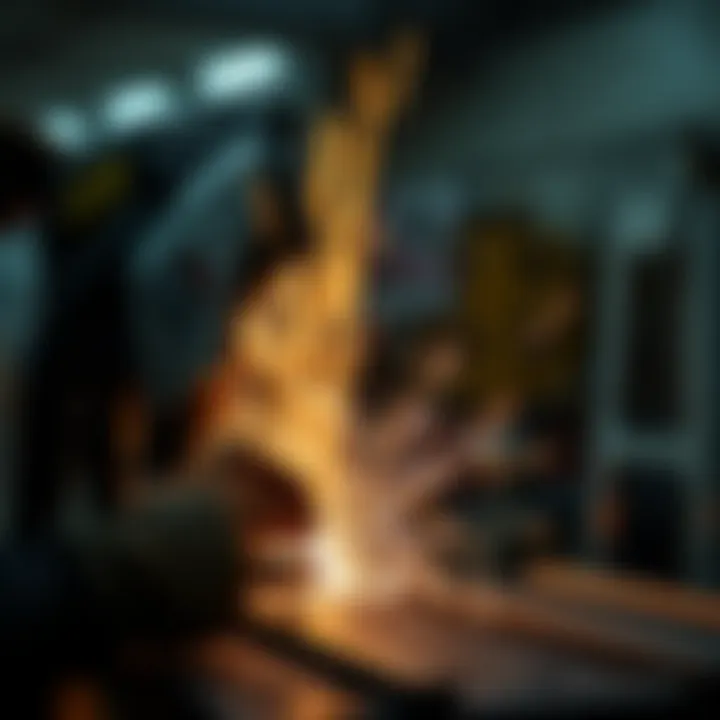
Arc welding making use of electric arcs to melt the materials being joined is perhaps the most well-known method. An electric current creates an arc between the electrode and the workpiece, generating enough heat to cause fusion. This technique is particularly versatile, working with various materials including steel, aluminum, and even certain plastics.
- Benefits:
- Offers deep penetration, making it suitable for thick materials.
- Equipment is often more affordable compared to specialized welding methods.
However, it does require a skilled hand; misaligned arcs can lead to defects in the weld.
MIG Welding: Process and Applications
MIG, or Metal Inert Gas welding, is a much-used method due to its simplicity and speed. It involves feeding a continuous reel of wire, which serves as both the electrode and filler material, while an inert gas protects the weld from contaminants from the air.
- Applications:
- Predominantly used in automotive repairs and manufacturing.
- Excellent for thin sheets of metal and does well with various metals, especially aluminum and mild steel.
Its automated nature allows for faster production rates, which is a significant advantage in high-demand industries.
TIG Welding: Key Characteristics
TIG, or Tungsten Inert Gas welding, is a more refined method that utilizes a non-consumable tungsten electrode to produce the weld. It offers precision and is often employed when working with metals that require a clean, strong weld. The welder often uses a filler rod manually, granting them more control over the weld quality.
- Characteristics:
- Creates high-quality welds that are often used in aerospace components and high-pressure applications.
- Enables welders to work with a variety of metals including stainless steel, copper, and even some exotic alloys.
Though it requires more skill and patience, the results are often worth the effort.
Spot Welding: An Overview
Spot welding is a process mainly used for joining two or more sheets of metal together at localized points through the application of heat generated from resistance to electric current. It's commonly seen in sheet metal work, specially in the automotive industry.
- Key Features:
- Ideal for joining several layers of thin materials.
- Fast and efficient, allowing for high-speed production lines.
However, it doesn’t work as effectively with thicker materials.
Submerged Arc Welding: Methodology
Submerged Arc Welding (SAW) is a process that involves a continuously fed filler wire and an arc formed under a blanket of granular fusible flux. The flux serves multiple purposes, including protecting the weld from contamination and providing a cleaner weld by eliminating spatter.
- Uses:
- Favored in large-scale projects like shipbuilding or manufacturing of heavy machinery.
- Yields deep penetration and high deposition rates, making it effective for thick materials.
This technique might not be suitable for all situations, but in the right hands, it can deliver remarkably robust joints.
The choice of welding technique dramatically influences both the quality and efficiency of the weld. Selecting the right method can therefore make or break a project.
In summary, these common welding techniques are integral to a plethora of industries, each serving unique functions while catering to varying material requirements. Selecting the appropriate technique lays the groundwork for successful welding outcomes.
Materials Involved in Welding
In the world of welding, the materials used play a pivotal role. Whether you’re constructing a bridge, a car, or a piece of art, the choice of materials can significantly affect the durability and stability of the final product. Understanding what materials are commonly welded and how their properties influence the welding process can provide insights that lead to better performance and safety in various applications.
Commonly Welded Materials
When it comes to welding, not all materials are created equal. The following materials are often used in welding practices due to their distinct properties:
- Steel: One of the most common materials, steel offers a strong and versatile option. Carbon steel, in particular, is celebrated for its strength and weldability, making it ideal for construction and manufacturing.
- Aluminum: Lightweight yet strong, aluminum is frequently used in automotive and aerospace industries. However, it requires specific techniques and preparation, such as cleaning to remove oxide layers, to ensure a good weld.
- Copper: Known for its excellent electrical conductivity, copper is often welded in electronics and plumbing. The challenge lies in its high thermal conductivity, which can necessitate special fillers and techniques.
- Stainless Steel: Valued for its corrosion resistance, stainless steel is commonly used in food processing, chemical industries, and medical equipment. Its alloy composition can make welding a bit more complex due to varying properties.
- Nickel Alloys: These materials are utilized in extreme environments where corrosion and heat resistance is critical, such as in aerospace and chemical processing sectors.


Being aware of these materials and the contexts in which they are used can guide the selection of the appropriate welding technique and filler materials, ultimately leading to successful outcomes.
Material Properties Affecting Welding
The properties of materials significantly influence how they respond to the welding process. Key characteristics include:
- Melting Point: Each material has a unique melting point which determines the type of welding process suitable for it. For instance, materials with higher melting points may require more powerful equipment.
- Thermal Conductivity: Materials like copper dissipate heat quickly, influencing welding speed and the methods employed to achieve a solid bond. On the other hand, steel retains heat longer, which can facilitate penetration and fusion during welding.
- Chemical Composition: The presence of alloying elements can greatly affect properties such as hardness, ductility, and weldability. For example, too much carbon can make steel brittle and difficult to weld.
- Grain Structure: How a material's grain structure changes during welding can impact its final strength and durability. A careful assessment of grain size and orientation is often necessary to predict performance.
Each of these properties underscores the importance of selecting proper welding methods and conditions, influencing the choice of parameters like heat input, filler material, and post-weld treatments. Focusing on these elements can aid novice and seasoned welders alike in achieving optimal results, leading to successful and safe welding operations.
"Understanding the materials involved in welding isn't just good practice; it’s essential for creating resilient and effective joints."
For more information on the properties of materials utilized in welding, consider visiting Wikipedia or the American Welding Society. This can equip both learners and professionals with the knowledge they need to navigate the complexities of materials in the welding field.
Welding Applications Across Industries
Welding serves as a cornerstone across many industries, acting as a vital process that not only joins materials but also enables the creation of complex and robust structures. This section delves into the significance of welding applications today, illustrating how various sectors leverage different welding techniques to optimize production, enhance safety, and innovate solutions.
Welding in Manufacturing
In the manufacturing sphere, welding is fundamental. It's where raw materials undergo transformation into useful products. From fabricating ship hulls to assembling machinery components, welding holds everything together. One notable illustration is how manufacturers utilize MIG welding for its speed and efficiency. For instance, in the production of heavy machinery, MIG welding is preferred for its ability to bond thick sections of steel quickly, allowing for high-volume output.
Moreover, the advent of laser welding technologies has taken efficiency to new heights. With greater precision and reduced distortion in materials, manufacturers can produce intricate parts with unmatched accuracy. This precision reduces material waste and enhances the quality of the final product, reinforcing the importance of welding in manufacturing.
Construction Industry Applications
In construction, welding is like the unsung hero, quietly ensuring structural integrity. Buildings, bridges, and pipelines rely heavily on welding. When it's about constructing skyscrapers, TIG welding often comes into play for its clean and strong welds, particularly important when dealing with stainless steel. This process minimizes defects, which could jeopardize safety in critical structures.
Moreover, welded joints resist weathering and pressure better than bolts or rivets, making them ideal for buildings exposed to the elements. Consequently, construction companies increasingly lean on advanced welding techniques to uphold durability while keeping costs manageable.
Automotive Sector and Welding Techniques
Welding's relevance in the automotive sector cannot be overlooked. It's crucial for manufacturing vehicles that need to withstand both regular use and rigorous crash tests. Techniques such as spot welding are fundamental in keeping the car's body panels intact while still allowing for lightweight structures.
Additionally, as the industry shifts toward electric vehicles, newer welding technologies like laser beam welding are gaining traction. These methods allow for seamless integration of battery components, crucial for ensuring the reliability and longevity of electric vehicle batteries. The integration of robotics into the welding process further enhances accuracy and worker safety, showcasing the progression of welding within the automotive industry.
Aerospace Welding Considerations
Aerospace stands as one of the most demanding industries for welding. Here, precision and reliability are not just preferences but necessities. Techniques like TIG welding are routinely employed across the spectrum, from crafting fuselages to crafting smaller components such as brackets and mounts. The tolerances in aerospace applications are extremely tight, making skillful welding essential.
Materials also present unique challenges; superalloys used in jet engines require specialized techniques to cope with high-temperature conditions. Consequently, engineers often face the dual-task of selecting the right welding process while considering potential issues like thermal expansion and material fatigue.
"In the aerospace industry, a tiny flaw can lead to catastrophic failure; hence, the welding precision is paramount."
Furthermore, inspections and stringent regulations guide the quality of the welding process, ensuring it meets safety standards. In this sector, every bead counts and mistakes are not an option.
In summary, welding remains a critical, multifaceted process across various industries, driving innovation and maintaining safety standards. Understanding these applications helps to appreciate its role amid a rapidly evolving global landscape.
Advantages and Disadvantages of Welding
Welding stands as a cornerstone in various industries, marrying materials to create strong, durable structures. Understanding the advantages and disadvantages of welding techniques is essential for anyone in the field—whether you are an engineer, a student, or a seasoned professional. Recognizing these elements can aid in making informed decisions regarding project feasibility and method selection.
Benefits of Various Welding Techniques
When it comes to welding, a myriad of advantages arise from the different techniques employed. Each method has its own unique perks that cater to specific needs in manufacturing and construction. Here are several benefits that stand out:
- Strength and Durability: Welded joints often exhibit superior strength compared to those created through other joining methods, such as adhesive bonding or mechanical fastening. For example, in large structures like bridges, welding ensures longevity and stability under various loads.
- Versatility: Welding can be employed across various materials, ranging from metals like steel and aluminum to thermoplastics. This versatility makes it applicable in an array of industries, ensuring that diverse material joining needs are met.
- Cost-Effective: While the initial setup may seem costly, especially for advanced techniques like laser welding, the long-term savings in materials and maintenance often outweigh the initial costs. This can greatly benefit manufacturing processes where production speed is crucial.
- Speed of Production: Techniques such as MIG welding allow for rapid welding processes, leading to shorter production times. For instance, automotive assembly lines often rely on spot welding for quick yet reliable joins.
- Minimal Material Deformation: Many welding methods produce low levels of heat distortion, especially techniques like TIG welding. This is significant in applications requiring high precision, such as aerospace component manufacture.


These advantages showcase why welding is a preferred method in a range of applications and industries, underscoring its significance in creating robust and reliable constructions.
Challenges in Welding Practices
On the flip side, it’s equally important to discuss the challenges that come with welding. Every advantage often has its counterpart, and being aware of these challenges can help mitigate issues before they arise. Below are some notable challenges faced in welding practices:
- Skill Requirement: Good welding requires a high level of skill and training. Inadequately trained welders can lead to defective welds, which can be costly in the long run. In industries like aerospace, where precision is paramount, hiring skilled professionals is a necessity.
- Health Hazards: Welders face various health risks, including exposure to harmful fumes and high temperatures. Protective gear and adequate ventilation are crucial, but they don't eliminate all risks. Moreover, without proper safety measures, injuries can occur.
- Equipment Costs: Professional-grade welding equipment can be expensive. For small businesses or startups, the investment in quality machinery can be a significant hurdle.
- Material Limitations: Not all materials can be welded together. For instance, certain composites may not react well to welding heat, limiting the versatility. Understanding the properties of materials involved is critical for successful welding.
- Post-Weld Treatments: Certain welding techniques may require additional post-weld treatment to ensure the integrity of the weld. This can add time and cost to the overall process.
Despite these challenges, the benefits of welding often outweigh the drawbacks when performed correctly and safely. The decision to utilize welding hinges upon a careful consideration of project requirements and challenges inherent to each method employed.
"In the world of welding, understanding both the benefits and potential pitfalls can mean the difference between success and failure in projects."
As the landscape of welding continues to evolve with new technologies and methods, being aware of these nuances allows practitioners to leverage the advantages while effectively navigating the challenges.
Safety Considerations in Welding
When it comes to welding, safety is not just a suggestion—it’s a necessity. The welding environment is fraught with dangers that could potentially harm workers if proper precautions aren't taken. Whether dealing with fumes, sparks, or potential electrical hazards, an understanding of safety measures is paramount in protecting oneself and ensuring a productive work environment. In this section, we’ll go over why safety considerations are crucial, the essential safety gear welders should wear, and some common hazards found in welding environments.
Essential Safety Gear for Welders
Having the right safety gear can mean the difference between a successful welding job and a trip to the hospital. Here’s a rundown of essential safety equipment that every welder should don:
- Welding Helmet: This is perhaps the most critical piece of gear. A good helmet protects the eyes and face from ultraviolet and infrared radiation as well as flying sparks.
- Protective Clothing: Flame-resistant long-sleeve shirts and pants made from materials like leather are essential to shield the skin from burns.
- Gloves: Welding gloves must be heat-resistant and durable enough to prevent cuts and abrasions while maintaining dexterity for fine work.
- Safety Boots: Steel-toed, slip-resistant boots guard feet from heavy sparks and falling objects.
- Respirators or Masks: Fumes and gases released during welding can be harmful. Using a respirator can significantly reduce exposure to hazardous materials.
- Ear Protection: Welders are often subjected to loud machinery, making earplugs or earmuffs necessary to prevent hearing damage.
Every piece of gear plays its part in creating a safe welding environment. Just like how a knight wouldn’t enter battle without armor, welders should not step into a workspace without suitable protective equipment.
Common Hazards in the Welding Environment
While welding has its merits, it also carries various hazards that could endanger workers. Recognizing these risks is critical in ensuring safety. Here are some common hazards found in welding environments:
- Fumes and Gases: Welding can produce toxic fumes. Depending on materials used, these can include metal oxides, silica, and other harmful compounds that can lead to respiratory issues.
- Fire and Explosions: Sparks from welding can ignite flammable materials nearby. Proper housekeeping and awareness of surroundings can mitigate these risks significantly.
- Electrical Shock: When using electric welders, the risk of receiving an electric shock is real. The key to avoiding this is maintaining equipment and ensuring all connections are secure.
- UV Radiation: The intense light produced during welding emits ultraviolet radiation, which can damage skin and eyesight. It's vital to shield oneself appropriately.
- Heat Burns: Overexposure to heat and the molten metal can lead to burns. Maintaining a safe distance from welding arcs and handling materials properly helps.
"An ounce of prevention is worth a pound of cure."
Understanding these hazards allows welders to adopt preventive measures and maintain a secure work environment.
In summary, welding can be a rewarding career or hobby, provided that safety is prioritized. The gear worn and the knowledge of risks involved play a crucial role not only in the well-being of welders but also in ensuring their productivity on the job.
For a deeper dive into safety regulations and best practices, resources like OSHA can provide valuable guidelines.
Future Trends in Welding Technology
Welding is a dynamic field continually shaped by technology and methodologies. As industries evolve, so does welding, adapting to new challenges and opportunities. Understanding future trends in welding technology is vital for both current practitioners and those entering the field, as these trends can offer insights into improving efficiency, safety, and the overall quality of welded products.
Automation and Robotics in Welding
Automation is increasingly becoming the backbone of modern manufacturing. In the context of welding, automation provides solutions that enhance precision and reduce manual labor. Automated welding systems, particularly robotic arms equipped for welding tasks, allow for consistent repetition of high-quality welds. This move towards robotic welding achieves several benefits, such as:
- Decreased production time
- Enhanced safety for workers, reducing exposure to hazardous environments
- Increased weld quality and consistency
Robots can be programmed for various types of welding techniques, including MIG and TIG, ensuring versatility. They also perform complex tasks with a level of precision that human hands simply cannot match. Moreover, the integration of sensors and artificial intelligence means these machines can adapt to changing conditions in real-time. For instance, if a robot detects a weld pool cooler than expected, it can adjust the speed or voltage automatically.
“Automation in welding is not just about replacing humans; it’s about augmenting their abilities to achieve remarkable levels of efficiency.”
As we look into the future, the effectiveness of robotics is likely to expand through smoother interactions with other technologies such as augmented reality, which can assist welders in real-time. Imagine a scenario where a welder can see a digital overlay of the framework to optimize their process!
Advancements in Welding Materials
The future of welding materials is just as crucial as the methods. Innovations in material science have led to new welding rods and fillers designed for specialized applications. High-strength steels and lightweight alloys, for example, demand techniques that can cater to unique properties, such as thermal conductivity and expansion rates. Further advancements include:
- Development of self-healing materials that can restore their integrity after minor damage.
- Introduction of hybrid materials that combine metal with polymers to create products that are not only strong but also resistant to corrosion.
These materials are particularly relevant in industries striving for greater sustainability. With the growing emphasis on eco-friendly practices, research in welding materials is heavily inclined towards finding alternatives that minimize environmental impact while maintaining performance.
Additionally, learning how to weld new materials, such as carbon fiber composites, imposes new challenges that may redefine welding curricula and training programs. These new frontiers require a workforce that is not only skilled in traditional welding techniques but also familiar with advanced materials and their properties.